No blog entries for nearly two years, and it’s tempting to craft an excuse. To be clear, it was my daughter’s dog, Loki–with a name like that he’s obviously guilty. You can see it in his body language:
Alright, it’s not Loki. It’s been an intense period, with a painful injury in the shop (no missing fingers thankfully) and a difficult recovery, a marriage in the family, an untimely death, and the crux of a long metamorphosis–actually, more than one.
One involves lutherie: making and working on stringed instruments. I started nearly 40 years ago, but made some horrible choices on a beat up but innocent Gibson Melody Maker (electric guitar)–even now I feel shame.
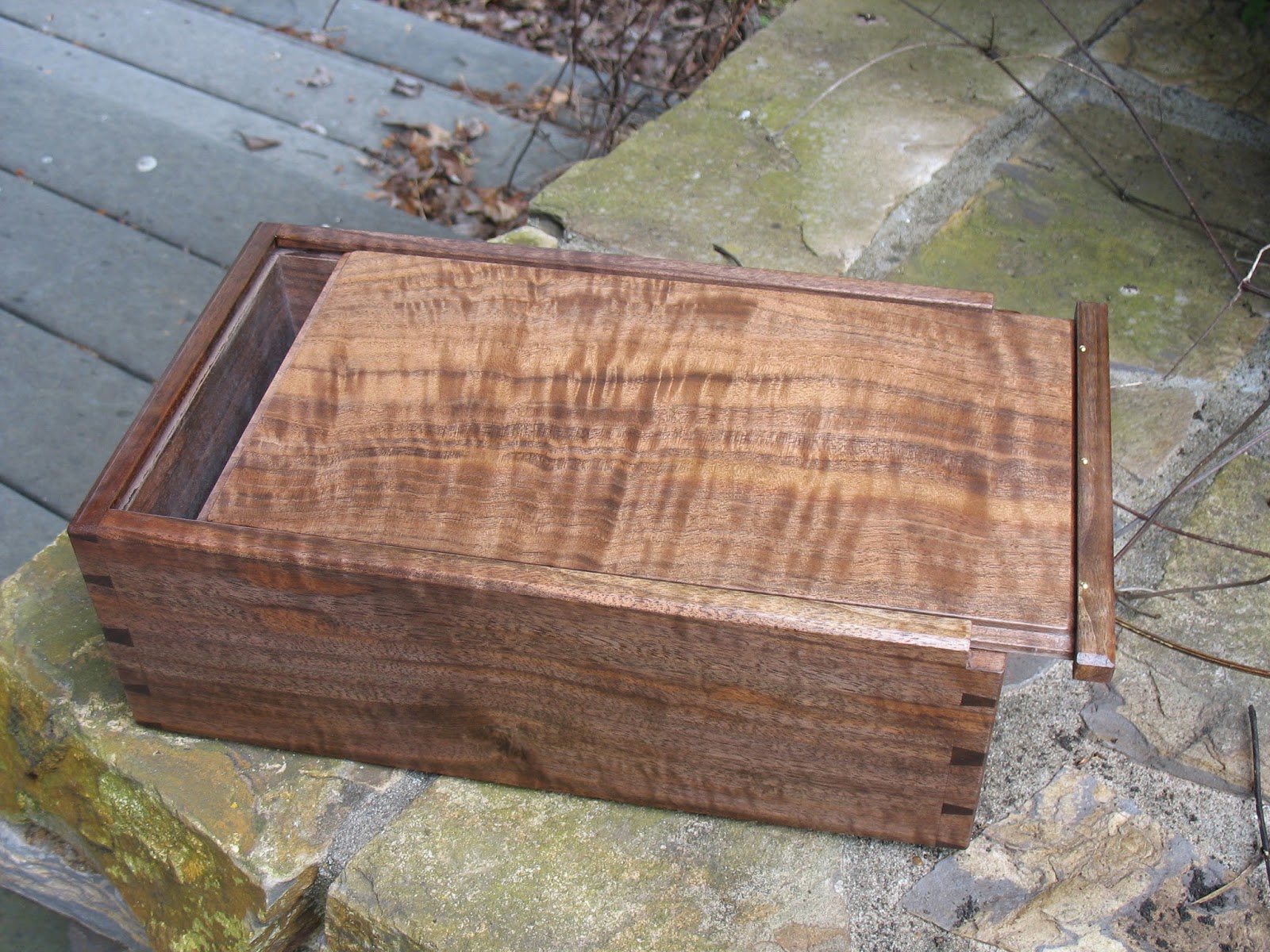
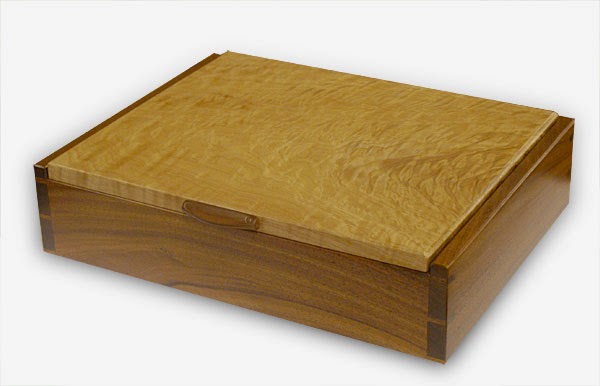
Instrument making has been stalking me ever since, though I evaded it by channeling the impulse into other design areas. It cropped up nonetheless, with instrument references and materials sneaking into my furniture designs, such as this 2005 piece:
Again and again woodworking mentors and friends told me to quit fighting, that my instincts and abilities pointed obviously toward lutherie, but fear dominated year after year. No matter that I designed and built pieces that were at least as difficult as a guitar–by this time I had convinced myself that one needed a “Stradivarius gene” in order to build a beautiful sounding instrument.
Life, however, continued to lay groundwork.
My good friend Tom Dufresne, physical therapist and trainer extraordinaire for the Nebraska women’s gymnastics team, and my most influential guitar teacher, visited my shop and concluded that I should build instruments. This was…terrifying…because historically when Tom said something like this it was essentially impossible to avoid even if it appeared impossible to accomplish.
Then I became friends with Lynn Dudenbostel, who makes mandolins and guitars that shake the earth. His mandolin no. 5 (!) was Chris Thile’s primary instrument (!!) for many years and recordings, though it now shares space with Dude no. 15 and a Loar. Lynn looked at my woodwork and put it to me simply one day at the Mandolin Symposium–“you can do this!”. No Strad gene excuses.
I went to the handmade instrument show at Maryhurst (in Portland) each year, and the Guild of American Luthiers convention, where I discovered repeatedly that delightful instruments were made by a wide variety of people, not one of whom appeared to rely on supernatural assistance. They too were generous and encouraging. I bought good wood. Then some more.
But I didn’t build. Some stubborn part of me still didn’t believe. Instead I built even more challenging furniture, with gentle curves everywhere (like an instrument), touchable surfaces and modeled details (like an instrument), and re-purposed instrument wood (alright already).
The shop injury finally pushed me into it. My shoulders were almost useless, so I couldn’t handle the large timbers needed to work on my furniture commissions. Staring dejectedly one day at the wall of huge planks that line my bench room, someone/thing quietly said “musical instruments don’t weigh much”. Fate, guardian angel, subconscious?–I don’t know, but it was as if it was said to me. Another (less sanguine) suggestion took shape later; “take the hint–there are worse injuries if necessary”.
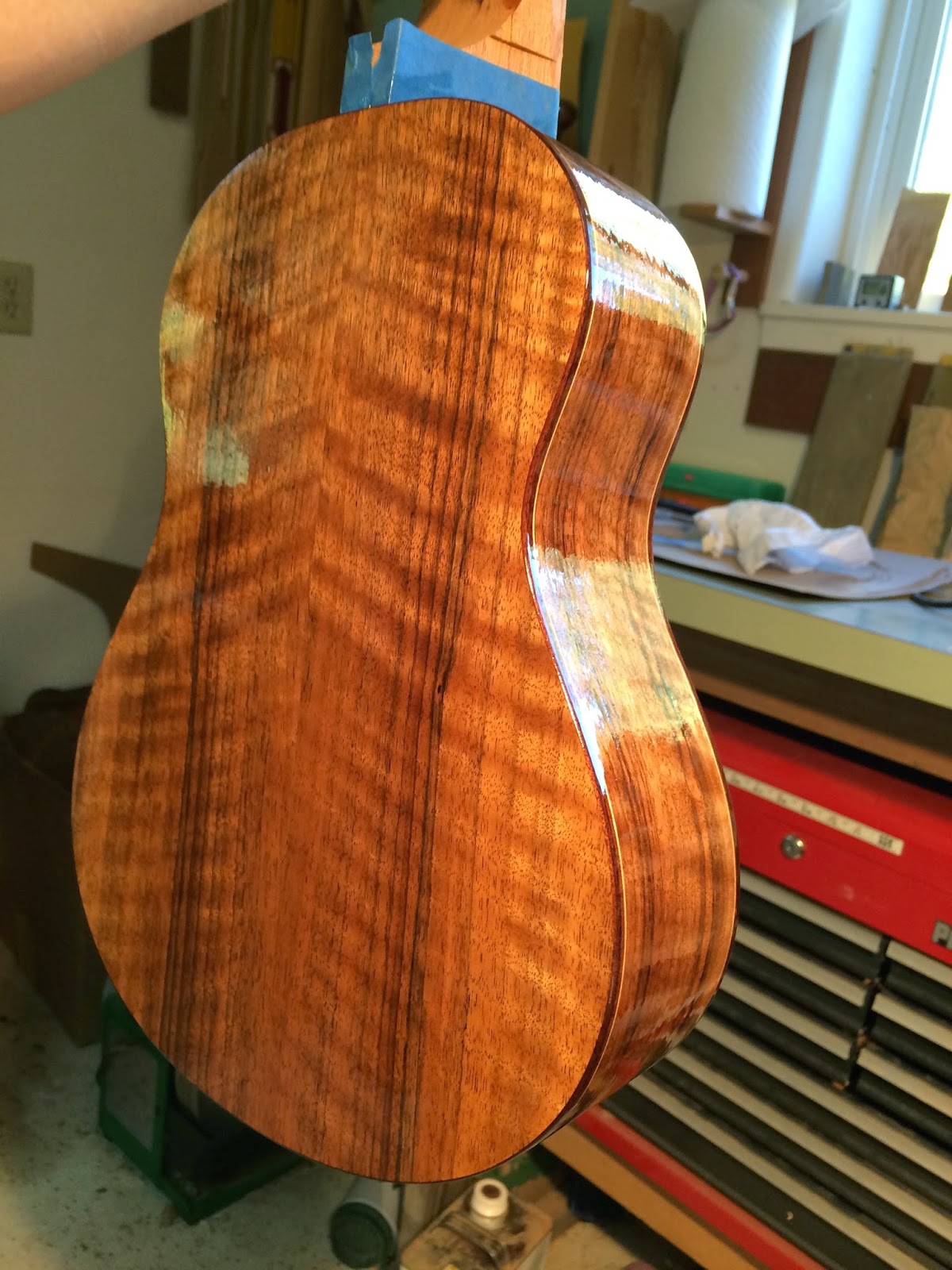
Now that sounds ridiculous, and it’s true that the shoulder injury was wreaking havoc with my sleep, but that’s how it came across to me. So I took the hint and built an ukulele, because Tom said he preferred it to a mandolin when I gave him the choice. I fought it all the way, but completed it out of desperation when I realized there was nothing else to enter in the annual show of the local woodworking guild.
Here it is catching morning sun in the shop:
It sounded terrible to me, though others argued otherwise. Then I heard someone else play it, and–wait a minute!–it sounded good, nicer (to me) than the instrument he had just given the concert on. It wasn’t the worst ukulele ever! This was confirmed at the Langley workshop, a Canadian ukulele orgy (if you can imagine) where gurus like James Hill, Peter Luongo, Chalmers Doane, and Gordon Myer of Mya-Moe put no. 1 under the microscope and offered congratulations, advice, and encouragement.
So naturally, I began to doubt that I could do it again. The 2nd instrument slowed, then stopped.
Rescue came from Hawaii, in the form of uke and classical guitar maker Woodley White, and performing legend Kimo Hussey, both of whom attended this year’s Guild of American Luthiers convention in Tacoma–the subject of a forthcoming post.



















 Pat Megowan Stringed Instruments